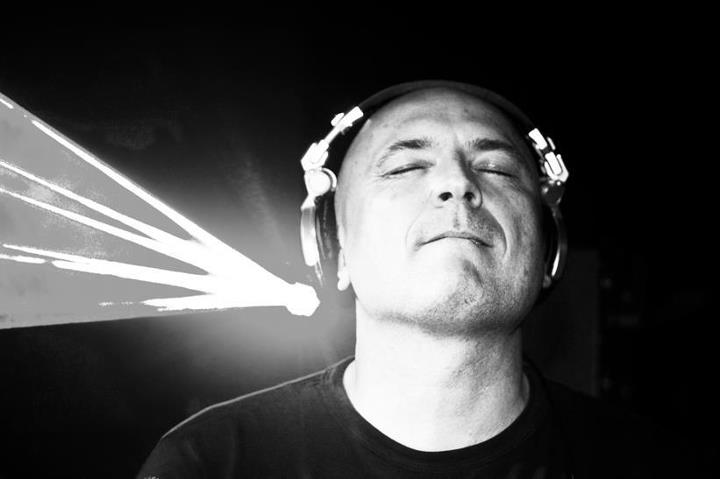
Claudio Cecchetto
I Love Disco interviews Cecchetto about the ’70s
“Back then, if someone asked you ‘what do you do?’ and you said ‘I’m a DJ,’ they
would reply ‘and for work?’, whereas now it’s seen as a real job.”
Memories:
“I became a disc jockey, I started at a small nightclub, before that I was in the coat check among the coats because the DJ’s role was basically that of a record changer. From there the situation gradually evolved, until I reached the legendary Divina in Milan, a nightclub that competed with Studio 54 in New York for the reputation of the world’s greatest nightclub of the ’70s. When I worked at Divina with Cesare Zucca (Zucca was already working there before me) we didn’t play any slow songs, I had no use for slow records. Divina was the first nightclub with these characteristics: extremely loud music and no slow songs. The music was so loud that people would climb onto the bar to speak into the bartender’s ear to order. It was truly a great period, but with records you went by intuition, then the situation evolved!”
Radio:
“In ’75 we got into radio, when Milano International was looking for DJs they would come looking for them in nightclubs and I said ‘let’s go and try radio.’ I must say there was a close connection between the nightclub and radio, during the day people would listen to the same songs as in the evening and they evoked fun, and they were happy.
So radio stations rode the wave of nightclub music, and radio’s great success was mainly due to nightclub music.
The passion for music:
The passion for music “starts from the nightclub, in the ’70s. I’ve always been a great enthusiast, before I used to listen to slightly more serious music, Pink Floyd, Genesis, Traffic. The listening experience was truly demanding because they were genuine works of art, and if someone disturbed me during the third track I would get angry, it’s a bit like making love, if they interrupt you starting over is a mess, so I said to myself, excuse the term, ‘I’d like to have quickies,’ get excited in three minutes, so I discovered Aretha Franklin, Wilson Pickett. There was great work by nightclubs and DJs who imported music from America. The sound of Philadelphia, then Patrick Hernandez, “Born to be Alive” I liked it very much, and since I was a DJ at Divina I said “how can I play it 5 or 6 times tonight?”. “You make me feel” by Sylvester had come out a bit earlier, with a similar sound, so I introduced Hernandez’s track on the microphone as ‘the new Sylvester,’ so that people were perfectly calm saying “ah Sylvester is doing great,” and everyone started dancing to it like crazy. Then at the end of the evening I said it was “Born to be alive.”
The “Giocajouer”:
I created the ‘Giocajouer’ and I’m very proud of it, after 30 years it’s still going, it’s become part of the social fabric. That experience also helped me think about the ‘Gioca jouer’ I used the same method with other records too. I remember that in a record, if there was a pause, I would say “Down, down, down…” and everyone would go down, “Attention it’s rising rising whoa…” so the DJ was the master of ceremonies. I came up with the ‘Gioca jouer’ thinking: “Come on, let’s do something where everyone does the same thing.” The funny thing is that everyone looks at each other to see if they’re doing it right! It’s an easy dance, and after 30 years it’s the only easy group dance, perhaps because there’s no one as foolish as me. In other group dances you have to watch the choreography and remember it. In the ‘Gioca jouer’ if you remember the choreography fine, otherwise I’ll tell you!