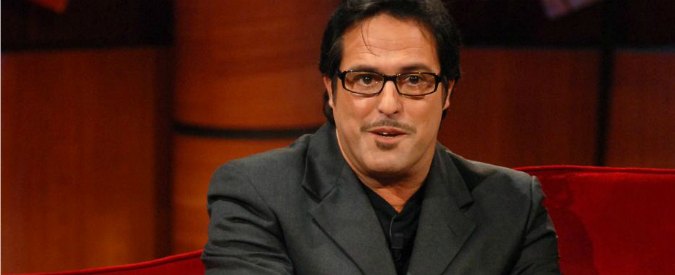
Marco Liorni
What did the ’70s represent for you, particularly the years of “Saturday Night Fever”?
They represented the discovery of the world. The ‘real’ world, I mean, the ‘adult’ world. In those years, as a young boy, I was transforming into a teenager, and I remember Saturday Night Fever was quite a shock: it was brutal in certain scenes at the time, the sex in the car for example, and then the world of nightlife and discos, which had an incredible allure. It told us about a world, it made us grow up and it made us dream.
An anecdote, a memory, a curiosity related to disco music to share with the friends of “I Love Disco”?
The power of that music. On TV in those years there was a disco music program on a private Roman channel where the presenter was alone, he would put the needle on the record that started playing and he would get excited and clap his hands to the beat until the end of the track: that’s it, the program was just that, but partly the charm of the early private TV stations, partly the power of disco music, it was incredibly strong, I never missed an episode!
Why did a ‘frivolous and superficial’ music become one of the most impressive commercial phenomena worldwide and a shared heritage across different generations?I don’t like to rationalize. It was powerful music, period. It was what you could dance to in discos. It was what got into your bones. And they were also wonderful songs… Gloria Gaynor… Village People… Donna Summer, Barry White! The Bee Gees, oh my God, what the Bee Gees’ songs were!
Why, in a society that burns through novelties in a week, has that music been a collective mass ritual in every disco on the planet for over 30 years?
I think nostalgia plays a part, and nostalgia not only because you were younger before, but especially nostalgia for a world that was less difficult to live in. But this doesn’t apply to the young people who dance to it even today, it’s simply that it’s perfect for making you move, it’s beautiful and it’s clean. Art. And Art is emotion, how can you explain it?
Why does even today’s trending music, fashion, and customs draw heavily from the ’70s?
From what I remember (I was a young man), they were somewhat dark years, but at the same time with flashes of very strong light, disco was among these, and also the birth of private radio and TV stations! There, just this alone would be enough to describe the ferment of those years. Today in many ways we are in a similar situation, these are also very dark years and not only because of the economic crisis. Perhaps those with more sensitivity—like designers and artists—perceive something similar in the ’70s and reinterpret it in a new form.
What do you think about Professor Tim Lawrence’s statement:
“In the USA, where the disco phenomenon also originated, disco music fostered the advancement of important civil rights (gay, Black, Hispanic…); in the rest of the world it was associated with disengagement and, worse still, with drugs, alcohol, and sex for its own sake. But the reality is that disco was one of the greatest phenomena of mass integration. Young and old, Black and white, professionals and workers, people on the left and right, everyone recognizes disco music as their own. Disco music is popular music par excellence: it is everyone’s heritage and belongs to everyone. We believe that alongside Pop music in general, and also Disco music, the time has come to add the word ‘culture.'”
the time has come to add the word ‘culture.'”
Is it culture?