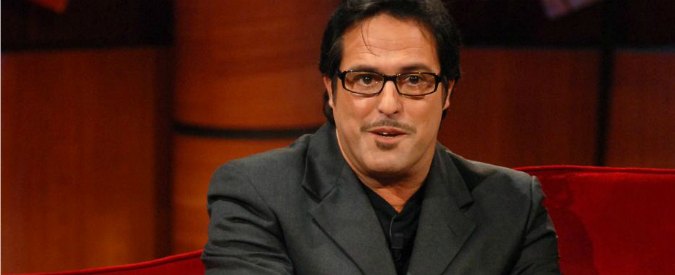
Cristiano Militello
What did the 1970s, and particularly the “Saturday Night Fever” years, represent for you?
It represented an infatuation—one that has since become perpetual—with a certain type of music. The sounds of Chic, Earth Wind & Fire, Sylvester, Donna Summer, and others won me over immediately, and I am surprised to realize how, even at such a young age, I already had quite mature musical tastes. I used to listen to the Fever album in my father’s study—where we had a very advanced Grundig turntable that placed the needle on the groove automatically—and I remember that during a track that was a reimagining of Beethoven’s Fifth, I used to have fun acting like a human slow-motion replay. I wasn’t exactly normal….
Is there an anecdote, a memory, or a curiosity related to disco music that you would like to share with the friends of “I Love Disco”?
Well, when Carlo Conti finished introducing Chic—who were guests in the studio that day—on Domenica In back in 2000 and introduced me onto the stage, I experienced a moment of complete bewilderment. And then, the first 45 rpm record I ever bought is unforgettable: HUSTLE by Van McCoy, 1975!
Why has “frivolous and superficial” music become one of the world’s most impressive commercial phenomena and a heritage shared by several generations?
Man, because it is absolutely awesome!
Why, in a society that burns through novelties in a week, has that music remained a collective mass ritual in every club on the planet for over 30 years?
It probably wasn’t that superficial. Or rather, let’s say that amidst so much superficiality, there were three or four serious gurus—musician-producers who have since remained in history to this day: Giorgio Moroder, Nile Rodgers, and Quincy Jones. Michael Jackson himself started with dance music; Off the Wall is full of it.
Why do even trend-setting music, fashion, and customs still draw so heavily from the 1970s today?
Perhaps also because today, insignificance, artistic overvaluation, and a total vacuum reign supreme in many circles. In the 1970s, there was an energy that is hard to find elsewhere.
What are your thoughts regarding Professor Tim Lawrence’s statement:
“In the USA, where the disco phenomenon was born, disco music favored the establishment of important civil rights (Gay, Black, Hispanic…); in the rest of the world, it was associated with escapism and, even worse, with drugs, alcohol, and sex for its own sake. But the reality is that disco was one of the greatest phenomena of mass integration. Young and old, Black and white, professionals and laborers, people from the left and the right—everyone recognizes disco music as their own. Disco music is the popular music par excellence: it is everyone’s heritage and belongs to everyone. We believe that alongside Pop music in general, and also Disco music, the time has come to add the word ‘culture’.”
Professor Lawrence is absolutely right. I would have added the word Culture a long time ago.